
What a Layton Resident Lookup Can Check
A useful Layton resident lookup is a cross-check, not a single search box. Begin with the person’s full name, a known address, or an older family clue. Then select the record whose custodian and coverage fit that clue. Property, voter, court, vital, business, and historical sources describe different relationships.
| Record | What It Confirms | Where to Search | Access |
|---|---|---|---|
| Property roll | Owner display, situs, mailing, parcel | Davis County Property Search 2.0 | Free, informational |
| Voter registration | Registration and permitted public fields | Utah Voter Search | Full identity/address inputs |
| Court records | Party, court, case type, date, history | Utah Courts Xchange | Billable search; restrictions apply |
| Vital indexes | Birth, death, marriage, divorce links | OVRS, Davis Health, Archives | Age and relationship rules |
| Business or license filing | Entity principal, agent, license status | Utah Commerce and DOPL | Filing connection, not residence |
An address favors Property Search and the Recorder. A full name plus complete address can fit Utah Voter Search. An old family question may begin with the Library, Archives, or a vital index. The source choice should follow the clue, not the hope that one result will contain everything.
Verifying a Layton Resident’s Records
Use at least two independent identifiers before treating records as the same person. Compare name spelling, address, parcel or legal description, court location and filing date, vital relationship, business filing date, or another source-specific field. A name hit is a lead. It is not an identity conclusion.
- Anchor the name to an address or parcel through Davis County Property Search or a permitted voter check.
- Run Utah Courts Xchange with the name, wildcard variants, court scope, case type, and date range that fit the question.
- Compare the case party role and filing date with a vital, newspaper, business, or deed index.
- Order an identified certified copy from the responsible custodian only when the eligibility rules fit.
- Docket
- The court’s running case record, including filings, events, and public history entries.
- Index versus image
- An index points to a record; an image is the scanned page or document itself.
- Certified copy
- A custodian-attested copy issued for an allowed purpose, separate from ordinary inspection.
Layton Resident Lookup in Xchange
Xchange is the main public case-information route for Layton-area district and justice matters. Its search form supports jurisdiction, all cases or judgments only, case number, last name or company, first name, case type, state/county/court scope, birth date, citation number, citation location, and date range. An asterisk is a wildcard, with examples such as William* or John*/Doe.
| Scope | Choose district, justice, both, state, county, or court as appropriate. |
|---|---|
| Party | Use last name/company and first name, with careful wildcard variants. |
| Case filters | Case number, type, citation details, birth date, and filing-date range. |
| Result limit | The help material caps a result set at 500. |
A result may show county, court location, case type, number, filing date, first and last party, party code, case history, and document links. Public district documents filed since July 1, 2010 may be available electronically. Search and document charges apply.
Check the Utah Courts Xchange portal for the current search route.
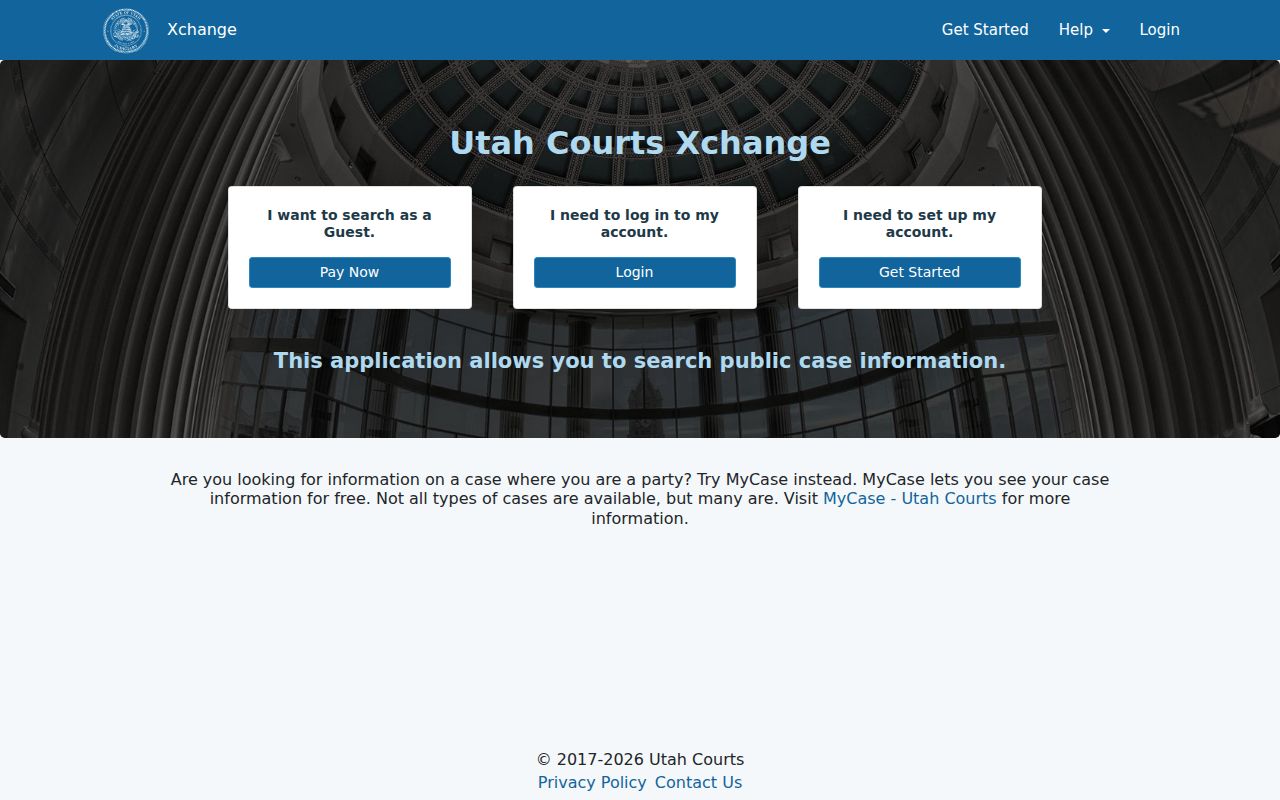
Most district data reaches the end of 1998, while justice coverage varies and converted older cases may contain less information.
If a name returns too many cases, narrow one field at a time: court or county, case type, date range, then birth date or citation detail when appropriate. If the result set reaches the portal’s 500-result limit, the narrowed query is more useful than copying a broad screen. For a document, keep the case number and request the identified record from the court when the online link is absent.
Layton Resident Lookup and Voter Search
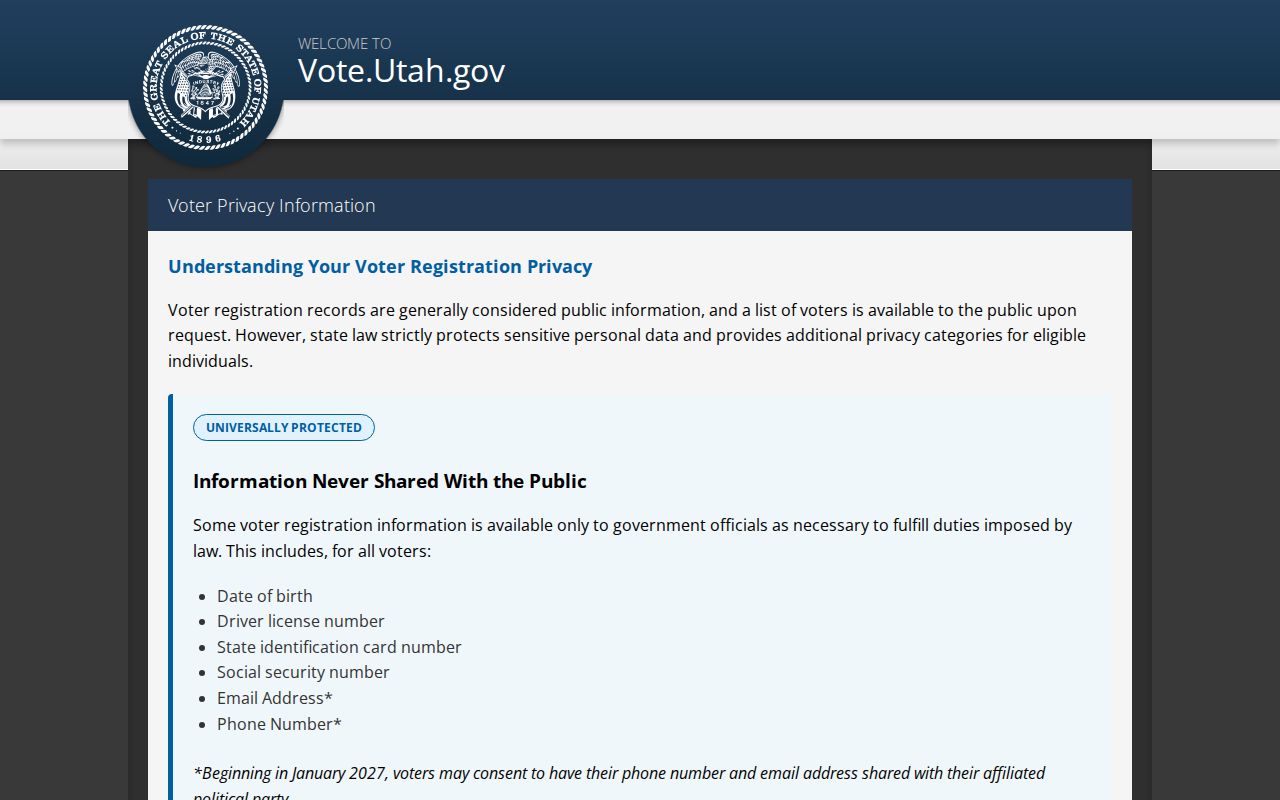
The official voter form requires First Name, Last Name, Date of Birth, Street Address, City, and Zip as its displayed inputs. That makes it an identity-and-address confirmation route. It does not offer a broad Layton street search. Public voter products may include legal name, voter ID, age range, residential and mailing address, districts, party or unaffiliated status, active or inactive status, last update date, and vote history.
Full birth date, signature, sensitive identifiers, and at-risk records are protected or anonymized. Vote history shows elections voted, not ballot choice. Treat a no-result cautiously because an at-risk designation, data status, or a field mismatch can affect the outcome.
Review the Utah voter privacy information before interpreting a match.
Layton Resident Lookup Vital Links
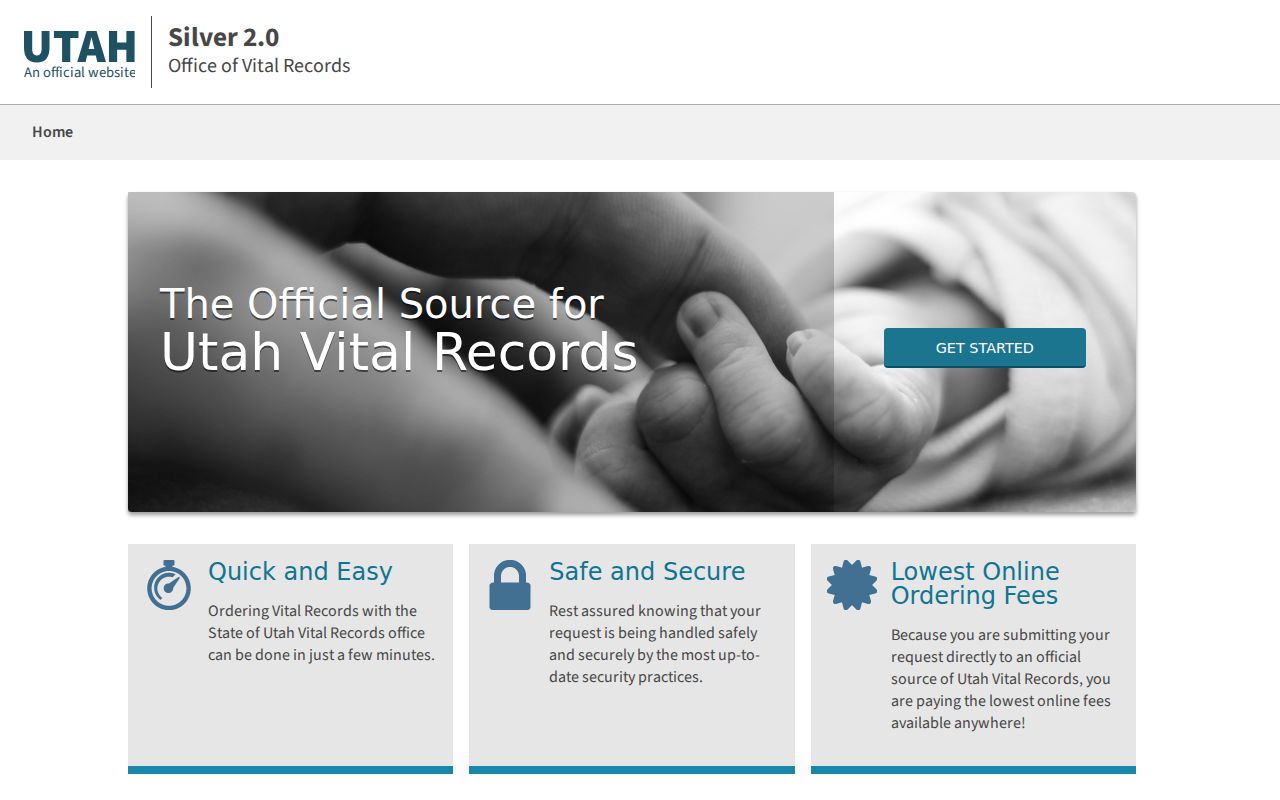
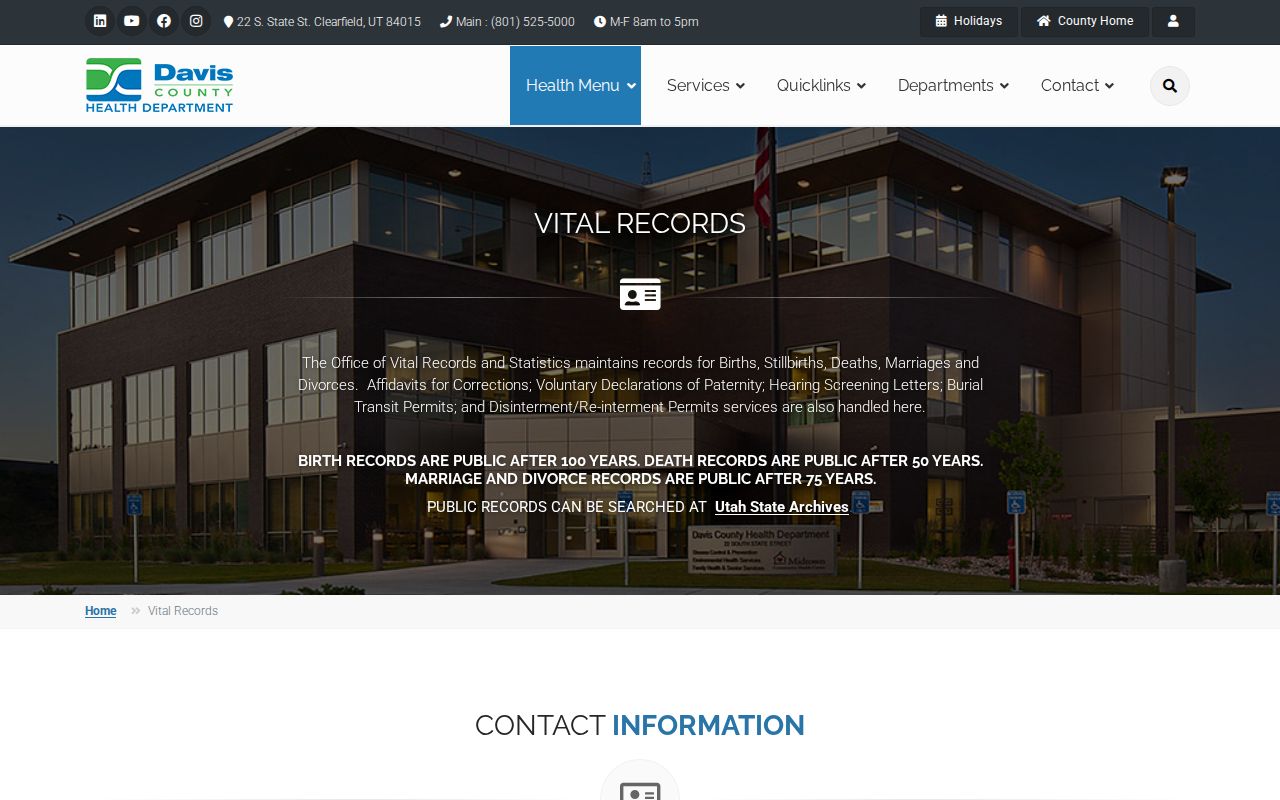
Utah Vital Records and Davis County Health divide the workflow by event and date. Birth records are private for 100 years under Archives guidance. Death records become public after 50 years. Davis County’s local page lists marriage and divorce certificate service for 1978–2010, limited marriage access for 2011 and later, a $25 per-record fee, and relationship proof. Current copy eligibility can require identification and tangible interest under Utah Code §26B-8-125.
Statewide birth registration was not required before 1898. County clerks handled registration from 1898, and state filing began in 1905. Davis County Birth Register material and historical divorce indexes can supply leads. A birth, marriage, or divorce index is not the same as the certified state or court record.
Use the event date and place before the person’s name alone. A Davis County Health request can require relationship proof, identification, and the correct fee; an older index may instead lead to Archives, a Clerk file, or a court. Preserve the result as an index clue until the responsible custodian confirms whether a certified copy can be issued.
Use the official Utah secure vital-record ordering portal for the state copy route.
Use the Davis County vital-record route for local eligibility and ordering details.
Custody Searches Are Snapshots
The Davis County Sheriff inmate roster is a current public snapshot. Its result columns include Booking Date, First Name, Last Name, Gender, Age, and Details. The inspected page displayed 29 result pages with 20 entries per page, but no historical retention period. An absent name cannot be described as never booked.
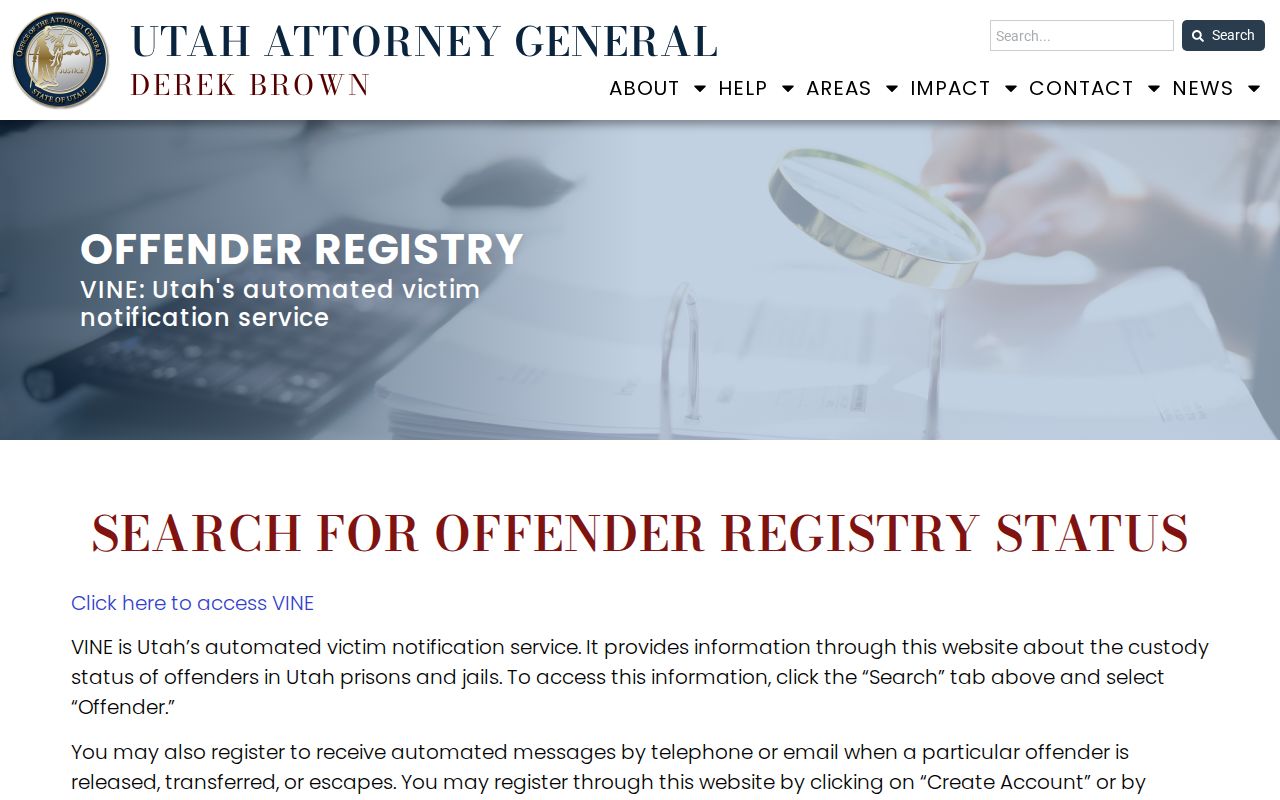
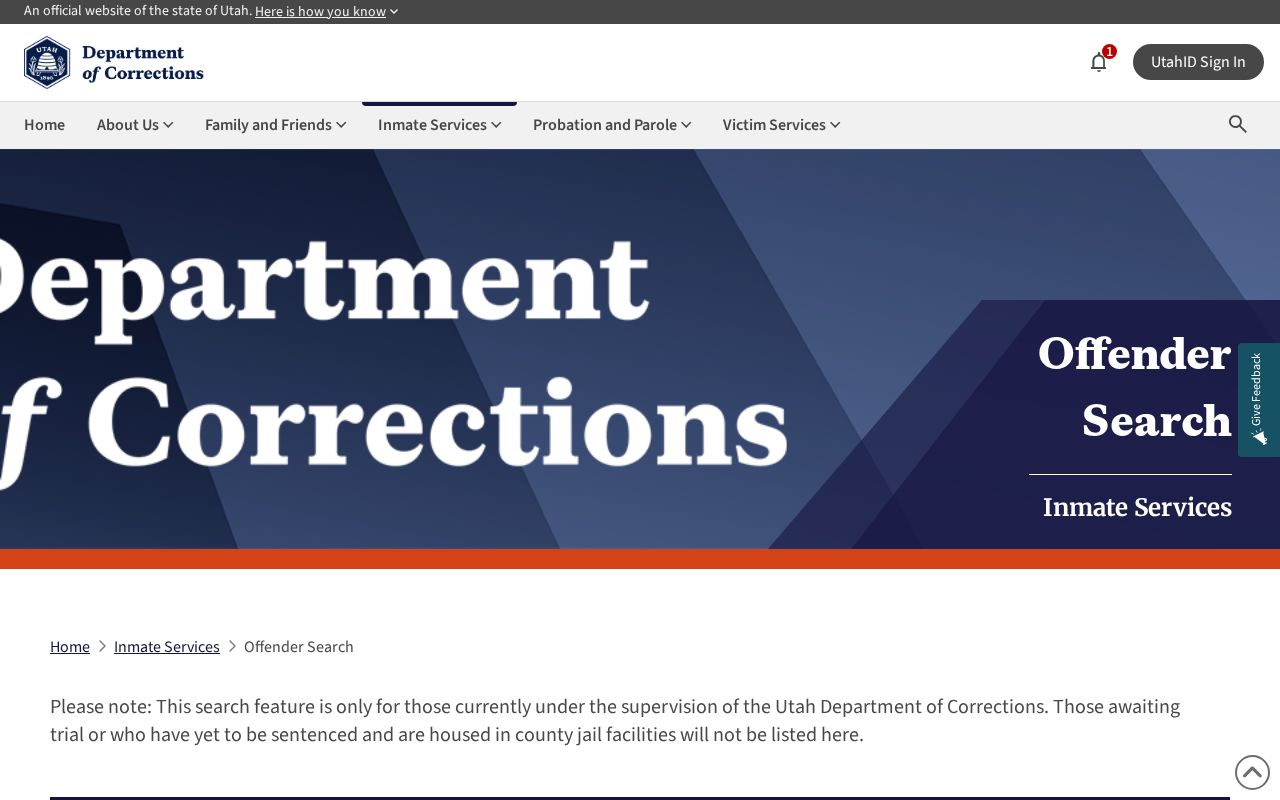
Utah DOC Offender Search covers currently incarcerated, probation, or parole individuals and accepts name or UDC ID. The Utah Attorney General points to VINE for custody status and notifications. These sources do not replace a public court docket, and a booking or custody entry is not a final disposition.
Use the Utah Attorney General offender-registry route for official registry and VINE links.
Use the Utah DOC Offender Search only for its stated current-status scope.
Layton Resident Lookup Family Paths
An heir search may lead through probate petitions, wills, notices, or a court file. A birth-parent question should use Utah’s official adoption or confidential-intermediary route rather than public-record guesswork. Former classmates are better approached through yearbooks, library collections, school archives, and alumni material. A business connection belongs in Utah Commerce filings or DOPL, not automatically in a residence conclusion.
For a past address, combine a deed chronology with a newspaper, directory, vital, or archive clue. The Layton by-street records page is the better handoff when the goal changes from one person to a whole address chain.
A business filing can show a principal, registered agent, or address, and a DOPL record can show an active license. Those are useful affiliation checks. They do not establish that the person lives at the filing or license address.
Keep business and license results as affiliation clues. Compare the filing date, entity status, principal or agent role, and address with the person record being checked. A company’s registered address may be a service or mailing location, so it cannot substitute for a property, voter, or vital record about residence.
Request the Missing Official Record
Use GRAMA when a public record is not exposed in the search portal. Utah’s Government Records Access and Management Act requires reasonable specificity. Name the custodian, record type, person or address variants, date range, and preferred format. Guidance gives a normal response target of 10 business days and five for an eligible expedited request.
For a court copy, state court, case number or parties, record sought, inspection or copy choice, and any eligibility or fee-waiver basis. Utah Courts lists ordinary paper at $0.25 per sheet, with separate electronic, audio, certification, and staff-time charges. Keep a response that says private, restricted, not indexed, not maintained, or held elsewhere.
If the record is vital, use the event date, county, subject, relationship, identification, and requested certification level to choose the state, Health, Clerk, court, or Archives route. Do not submit the same local form repeatedly when the event belongs to another custodian.
Limits on a Layton Resident Lookup
Utah voter privacy rules restrict sensitive fields and can shield at-risk records. Safe at Home provides a substitute address and mail forwarding for qualifying safety situations, normally for four years. Court privacy classifications, vital-record age and relationship rules, and GRAMA classifications can all produce an absent result. Absence is not proof that a person is not registered or connected to Layton.
Lawful use. A Layton resident lookup supports genealogy, reconnection, civic research, and personal record review. Never use a result to stalk, harass, intimidate, or harm anyone.