
Layton City Directory Collections
The University of Utah Marriott Digital Library’s Utah City Directories collection is the main digitized starting point. Its description covers residents, streets, businesses, organizations, and institutions, arranged alphabetically or geographically and often supported by advertisements. Inspected examples include Salt Lake City Directory 1890 and R.L. Polk suburban volumes from 1959, 1975, and 1977–78. Those examples prominently cover Bountiful and Woods Cross. They demonstrate the method, but they do not prove a Layton annual run.
| Collection | Years | Where Held | Access |
|---|---|---|---|
| Utah City Directories | 1890; 1959; 1975; 1977–78 examples | University of Utah Marriott Digital Library | Free browsing where digitized |
| Layton-specific annual run | Not confirmed | Digital results inspected; local shelf requires inquiry | Do not assume coverage |
| Davis County Clipper | 1892–1992 | Davis County Library digital resources | Searchable newspaper run |
| Layton newspaper titles | 1925–1950 catalog sequence | Library of Congress and library holdings | Issue access varies |
The important gap is not a missing war-year volume but the absence of a verified Layton publisher, annual span, reverse-directory shelf list, or final printed year. Treat every local hit as an item-level discovery. The Library and Museum can help identify microfilm, yearbooks, oral histories, or local catalogs that the public search does not expose.
A collection record is only the first access channel. For a digitized item, save the collection name, volume or issue year, page image, and item URL. For a shelf or reel, ask Layton Branch or the Heritage Museum for the title, publisher, years, call number, and whether staff can view the address section. If neither search nor local inquiry identifies the volume, use the Davis County Library digital resources, Utah State Archives, and FamilySearch as separate finding-aid routes.
Reading a Layton City Directory Entry
The inspected 1890 directory page shows a name followed by role or occupation, organization or business association, and address. A local item may use a similar pattern, but the volume’s own abbreviation key controls. Capture the page image, title, issue or volume date, and exact spelling before expanding any shortened term.
| Name | Printed person name, with spouse or household notation if present. |
|---|---|
| Role or occupation | Work or organizational role printed in that volume. |
| Address | House number, street, ward, or other place wording exactly as printed. |
| Organization | Employer, business, church, club, or institution when shown. |
| Owner or widow mark | Use only when the volume defines the symbol or abbreviation. |
- Criss-cross section
- A street-order section that lets a dated address be searched without knowing a surname.
- Householder index
- An index organized around the main listed household or address, when a volume provides one.
- Abbreviation key
- The volume’s legend for short forms, symbols, and relationship or address marks.
Read the line in its printed setting. A role or organization can help separate two people with the same name, while a street-order entry can reveal a dated address pattern. The entry still describes the publication’s scope and date, not a complete household or current residence. Preserve the image before interpreting an abbreviation.
Layton City Directory Library Clues
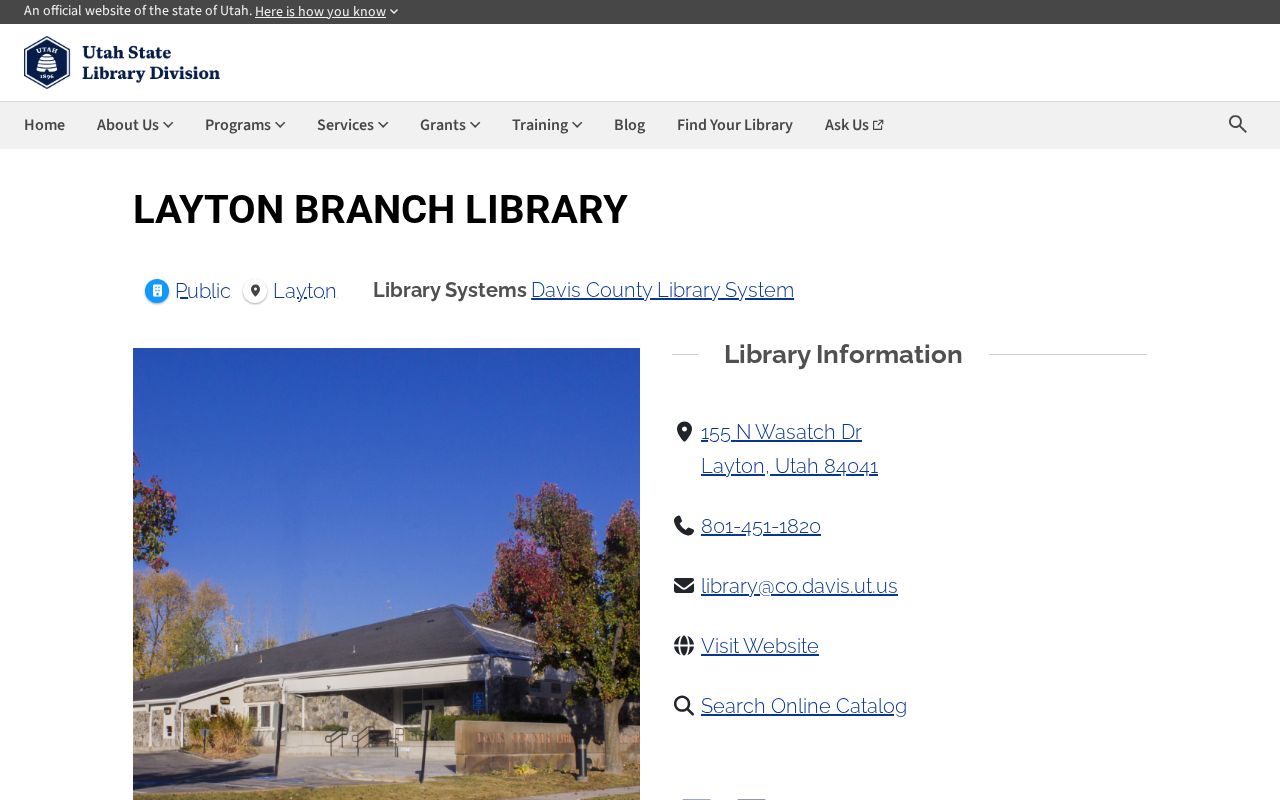
Layton Branch is at 155 North Wasatch Drive, Layton, Utah 84041. The library lists public hours of Monday through Thursday 10–9 and Friday through Saturday 10–6, with Sunday omitted from the published schedule. Its digital-library page points to searchable Davis County Clipper issues from 1892–1992 and other newspaper, local-history, and state-record resources.
Ask for microfilm, yearbooks, genealogy databases, reverse-directory holdings, and catalog records by title rather than asking for “everyone in Layton.” Give a surname, former place name, approximate year, and street or neighborhood term. The published research did not verify a Layton-specific reverse-directory run, so staff help is a route to discovery, not evidence that a set exists.
Bring a short source worksheet: the name as printed, likely year, current or former street, neighborhood term, and the question the entry should answer. Staff can then distinguish a newspaper reel, a city directory, a yearbook, and a genealogy database. That distinction matters because a newspaper notice may give an event, while a directory line gives a dated listing.
Begin with the Davis County Library digital library for local newspaper and history entry points.

A library catalog or finding aid identifies a collection; the page image or reel is the item-level evidence.
Confirm the branch details at the Utah library directory listing for Layton Branch.
Layton City Directory Place Clues
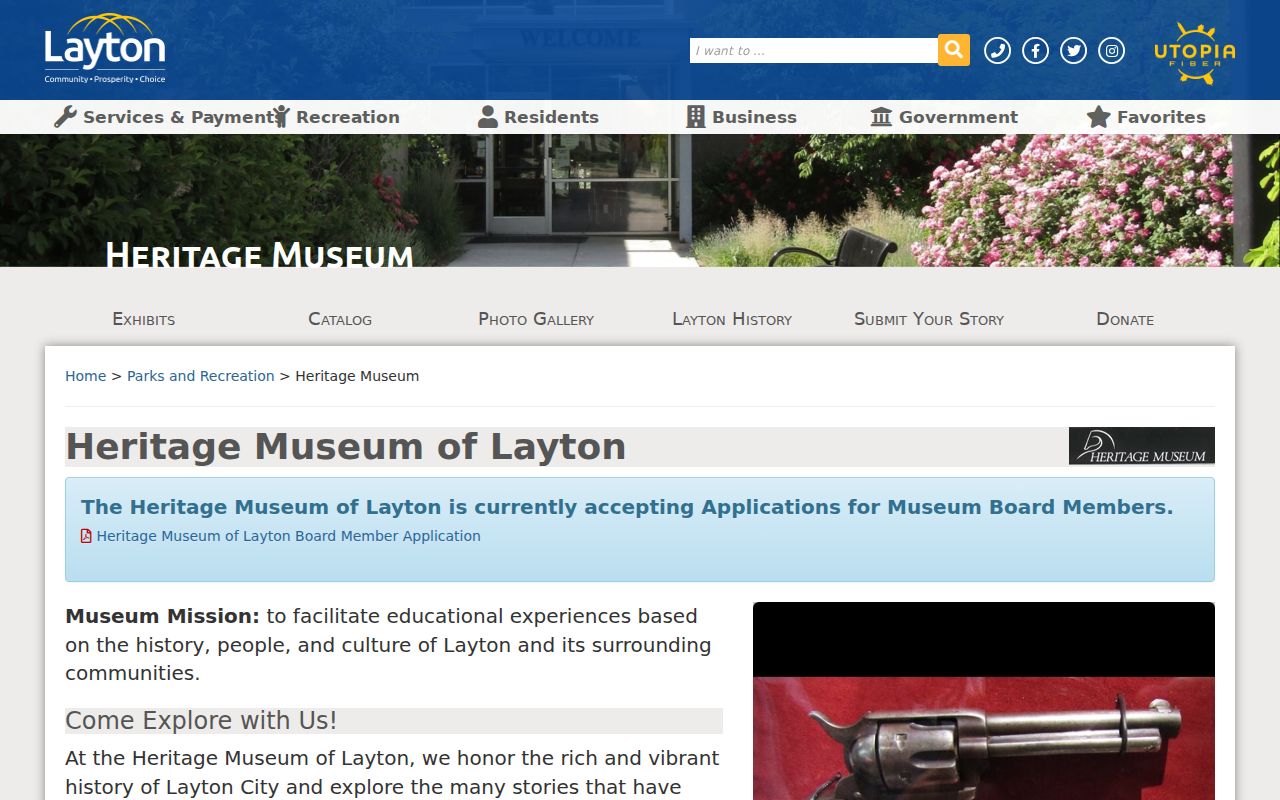
The Heritage Museum of Layton is at 403 North Wasatch Drive. Its public history records a citizen-group origin in 1972, nonprofit formation in 1973, opening in 1981, and the Heritage Museum name from 1983. CatalogAccess, photographs, artifacts, and oral-history PDFs add people, businesses, neighborhoods, and local descriptions that a city directory may omit.
Search Verdeland Park, O-Court, H-Court, Hill Villa, Skyline, Ellison, and Little Scotland as exact terms. They can unlock a newspaper or oral-history hit when a modern street query fails. The museum’s collection is not a current resident roster. Use its place clue with a dated parcel, newspaper, directory, or archive source.
See the Heritage Museum of Layton for local collection and contact information.
Layton City Directory Newspaper Gaps
The Library of Congress identifies the Layton Weekly News-Express from 1925 to about 1940 and the Layton Journal as the succeeding title for 1940–1950. Davis County Library’s Clipper run reaches from 1892 through 1992. Search each title with surname variants, place names, business names, and the neighborhood terms found in museum material.
Newspapers can reveal an obituary, a marriage or birth notice, an organization event, a legal notice, a business address, or a home address. Keep publication date separate from event date. A notice may describe a former address or rural route, so it belongs beside, not in place of, the city-directory entry.
Archives Keep the Older Index Trail
Utah State Archives provides Davis birth and divorce indexes, statewide death and delayed-birth indexes, Second District court index books, city and town files, and digital collections. The Second District books are browsed by image, with plaintiff and defendant names, case dates, and civil or criminal register structure. Later books become civil-only in some early-1960s series.
FamilySearch’s Utah, Davis County catalog covers 1869–1953 and may provide images of originals held by the Davis County Clerk or Recorder, subject to account or location rights. Preserve the series, volume, page, image, repository, and access date. A finding aid or index hit is not the same as a certified copy.
Trace a Layton Household Across Years
A city directory is a dated snapshot. Pair it with a census year, newspaper notice, deed, obituary, or archive index so a change in address has more than one explanation. A name that disappears may reflect a move, death, a missed edition, a change in listing policy, or a place-name shift.
- Find the earliest name or address entry and copy its exact spelling, volume, page, and place label.
- Check the next available volume and note every address, spouse, role, and organization change.
- Use a street-order or criss-cross section, if the volume has one, to see the surrounding address pattern.
- Pair directory years with federal census years and dated deeds or newspapers, keeping each source’s limits visible.
- Use an obituary, probate notice, vital index, or archive record as an endpoint only when the source says so.
For Layton, test Kays Ward, Freedom, Kaysville, Layton, East Layton, and Laytona in older volumes and newspapers. The city’s modern name does not guarantee the same label in a historic directory. Preserve original spelling and state clearly when a local annual run remains unverified.
A directory entry can establish that a name and address appeared together in a particular volume. It cannot by itself establish title, full household membership, or a present-day address. Pair it with the source that answers the missing question.
Occupation and organization marks are also time-bound. They can explain a person’s public connection in that volume, but they should not be expanded into an assumption about current work, current residence, or family structure.
For a useful citation, retain the repository, collection title, publisher, volume year, page or image number, item URL, original spelling, and whether the text came from OCR or a checked page image.
The Utah collection’s inspected 1959, 1975, and 1977–78 suburban items are valuable method examples because they show how a printed directory can combine names, streets, businesses, and advertisements. Their Bountiful and Woods Cross emphasis is also a warning: a nearby suburban volume is not automatically a Layton volume.
If a local annual run is found later, record the publisher and shelf or item identifier before drawing conclusions from it. Coverage should be stated at the volume level, not inferred from a search screen that happens to return a Utah directory.
For a household that needs current confirmation, move from the historical city directory to the responsible modern source. The directory supplies the old date and address; property, voter, court, or vital records answer the later question under their own rules.