
How Layton Residents Are Found
Start with the strongest fact in hand. An address points to Davis County Property Search, where the owner-name, property-address, parcel/serial, and document-entry routes meet. A full name and address can be tested against Utah Voter Search. A past household needs a different path through deeds, newspapers, directories, and archive indexes. The result is a set of leads, not a single master roster.
Use one source to learn what relationship it represents, then use another to check the match. An assessor result may show an owner and mailing address, a voter file may show a registration, and a court index may show a party to a case. None alone proves that every person connected with a parcel lives there today.
- Enter the known name or address in Davis County Property Search 2.0 and save the parcel or serial number.
- Compare the situs address with the mailing address, then note the date and any current or historical label.
- Use the parcel and owner name in the Davis County Recorder REDI-Web trail.
- For a living registration question, enter every required field in Utah Voter Search.
- For older people and households, check newspapers, local collections, and State Archives indexes before making a GRAMA request.
Layton’s Records Offices and Keepers
Layton records sit with several custodians. The Davis County Recorder and Assessor are in Farmington, while Layton City keeps municipal records in Layton. The County Clerk routes elections, marriage licensing, and public-record questions. Davis County Health handles local vital-record services, and Utah Courts holds case files. Naming the right office matters because a county page can point to a record that another agency actually controls.
Davis County Recorder / Register of Deeds
61 South Main Street
Farmington, UT 84025
(801) 451-3225
Davis County Clerk and Elections
61 South Main Street
Farmington, UT 84025
(801) 451-3213
The Recorder offers public terminals and staff assistance, but does not perform title searches or give legal advice. The County Clerk’s public-record route sends birth and death questions to Health, court questions to the courts, and property matters to the Recorder or Assessor.
Confirm office roles through the Davis County Recorder before requesting a copy.
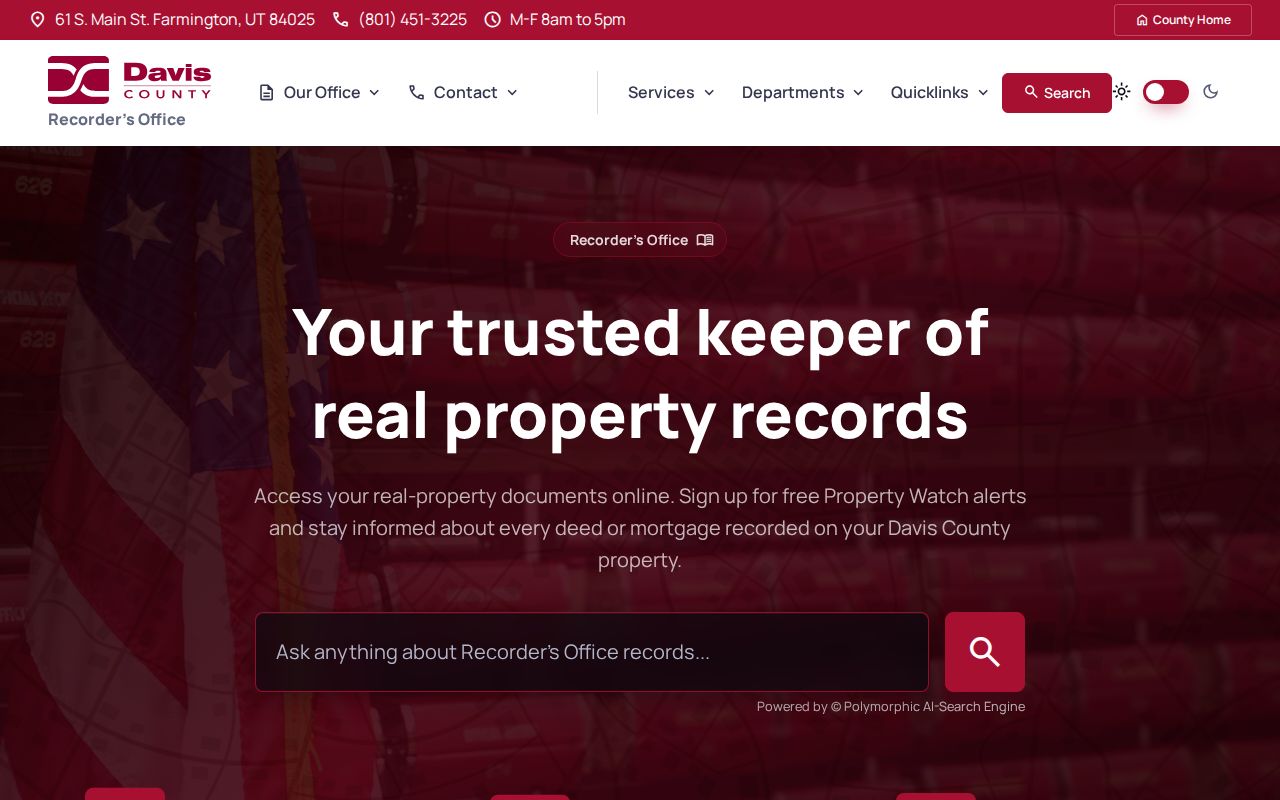
The public office page also distinguishes a record lookup from legal title advice.
County records are centered in Farmington even when the property or person is in Layton. That city-county split explains why a request sent to the wrong desk may return a referral instead of a record. Keep the referral and the exact office name in the research note.
The Davis County Recorder lists office hours Monday through Friday, 8 a.m. to 5 p.m., and provides public terminals. Layton City’s GRAMA route is separate at 437 North Wasatch Drive. The difference is important in a request: city permits and municipal files do not become county records simply because the address is in Davis County.
Current Sources Behind Layton Records
There is no one current Layton resident list. The useful directory sources overlap, but each has a different keeper and boundary. Property records describe an ownership relationship, voter records describe registration, and court or business records describe a filing relationship.
| Source | Who It Lists | Keeper | Access |
|---|---|---|---|
| Property Search | Owner, situs, mailing, parcel clues | Davis County Assessor | Free public portal |
| Recorded documents | Parties, deeds, plats, chronology | Davis County Recorder | Index plus paid copies |
| Voter lookup | Registration fields for a known person | Utah elections offices | Full name and address inputs |
| Court search | Case party, court, type, date | Utah Courts | Billable Xchange search |
| HOA registry | Association name and alias | Utah Commerce | Public registry search |
Use the source that matches the question. The Layton resident search page is the better route when one person must be checked across several records. For a street or parcel, property and recorder records carry more weight than a broad name search.
Access is not limited to a web form. The Recorder describes public terminals and staff assistance in Farmington, the Clerk routes a public-record request to the correct county custodian, and Layton City accepts municipal GRAMA requests at its Wasatch Drive office. Libraries, Utah State Archives, and FamilySearch provide older indexes, newspaper runs, or finding aids when a modern portal has no matching entry.
For a reproducible Layton residents directory note, record the source name, exact URL, search fields, date checked, result wording, and next custodian. That small audit trail distinguishes a current public result from a historical clue, a restricted record, or a search that simply did not cover the needed year.
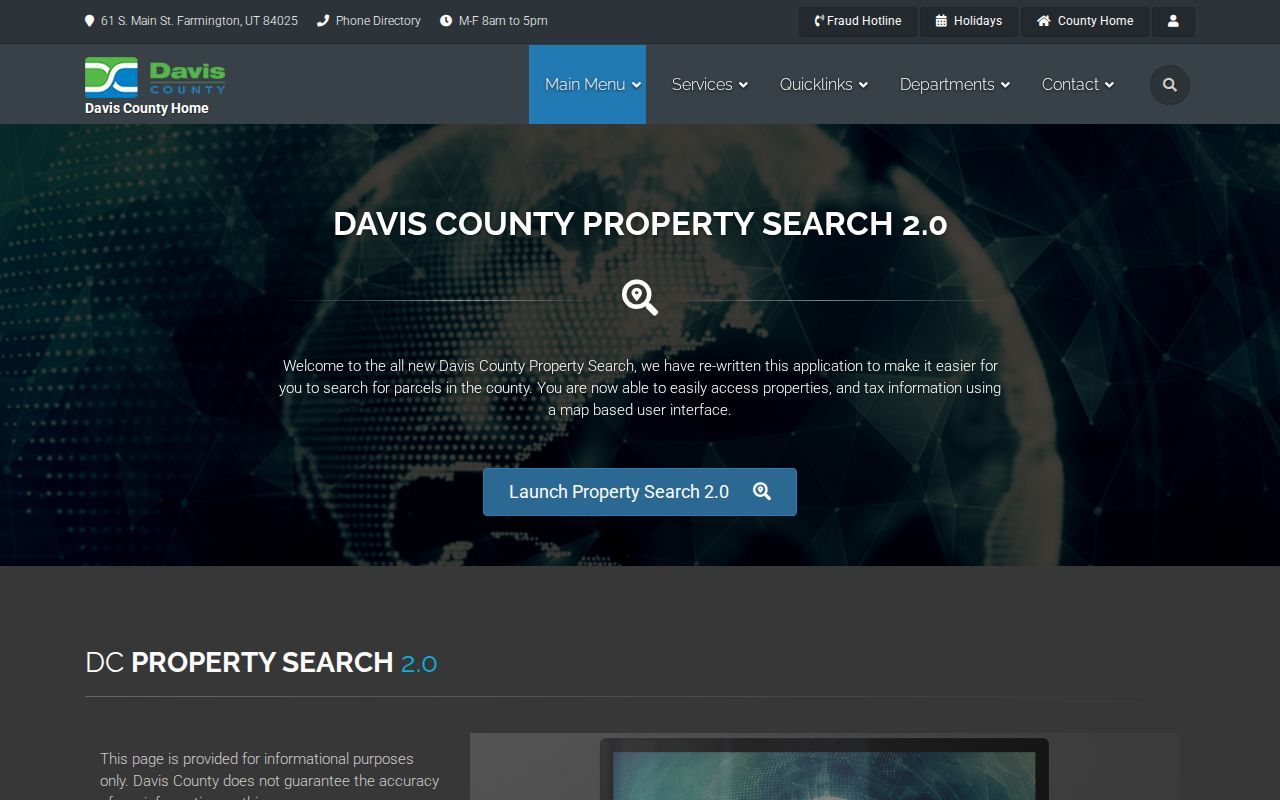
Start with the Davis County Property Search landing page for current map and parcel options.
Layton’s Two Official ZIP Labels
Davis County’s city-by-ZIP table lists Layton under 84040 and 84041. Those rows are useful local checks, but neither gives a complete resident count or a parcel boundary. USPS decides the delivery ZIP for an exact address, while Census ZCTAs are statistical areas built from 2020 Census blocks.
Keep the USPS result, the county row, and the parcel jurisdiction together. City labels, postal labels, and municipal boundaries can differ near an edge. The research did not locate a definitive neighborhood crosswalk, station assignment table, or ZIP realignment history.
Search Layton’s Earlier Names
Historical place names are practical search keys. The area began as a Kaysville agricultural extension in 1850, used Kays Ward and Freedom in different periods, took the Layton post-office name in 1886, separated from Kaysville in 1907, and incorporated in 1920. East Layton and Laytona also appear in later development and annexation history.
Use the period’s own label in a newspaper, deed, archive, or directory query. A result using Kaysville is not automatically wrong, and a modern Layton label should not be pushed backward without a dated map or legal description.
Newspapers Add a Dated Human Link
Davis County Library identifies searchable Davis County Clipper issues from 1892 through 1992. The Library of Congress catalogs the Layton Weekly News-Express from 1925 to about 1940 and the Layton Journal as a succeeding title from 1940 to 1950. Search titles with surname, place name, business, organization, or street variants.
Open the official Utah Voter Search only after checking the required fields.
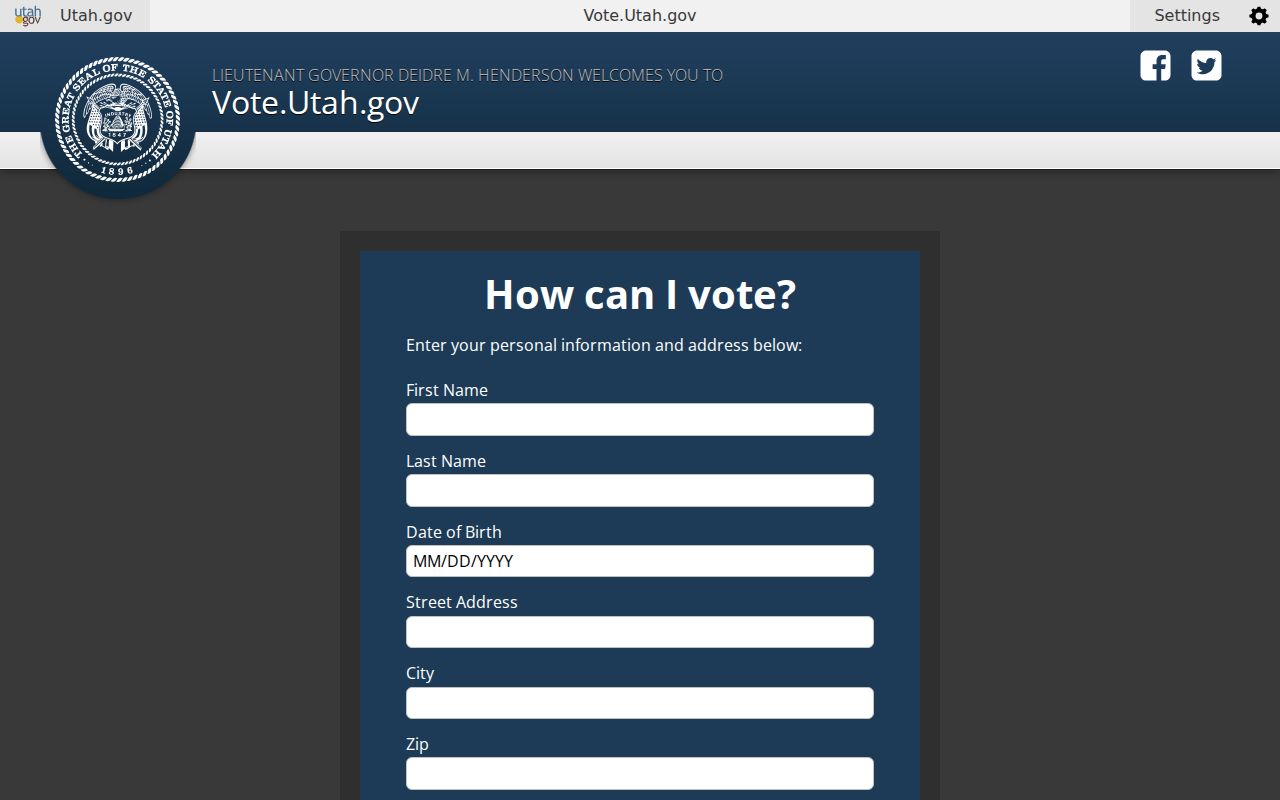
The visual reminder is useful: a voter lookup starts with a known person and does not reveal an unrestricted street list.
A notice can provide a family relationship, address, obituary, wedding, birth announcement, business connection, or land transaction. Preserve the publication date separately from any event date. Newspaper language may use a ward, rural route, neighborhood, or former city name.
Layton Case Leads in Xchange
Utah Courts Xchange searches district and justice court information with jurisdiction, case number, last name or company, first name, case type, county or court scope, birth date, citation details, and a date range. The asterisk is a wildcard. Results may show court, case type, number, filing date, party role, case history, and document links.
Coverage varies by era and court. Most district data reaches the end of 1998, while justice coverage varies; electronic public district documents filed since July 1, 2010 may be available. Sealed, expunged, juvenile, and other private matters can be absent. A party listing is not a final disposition.
Check the Utah Courts Xchange information page for the current search route.
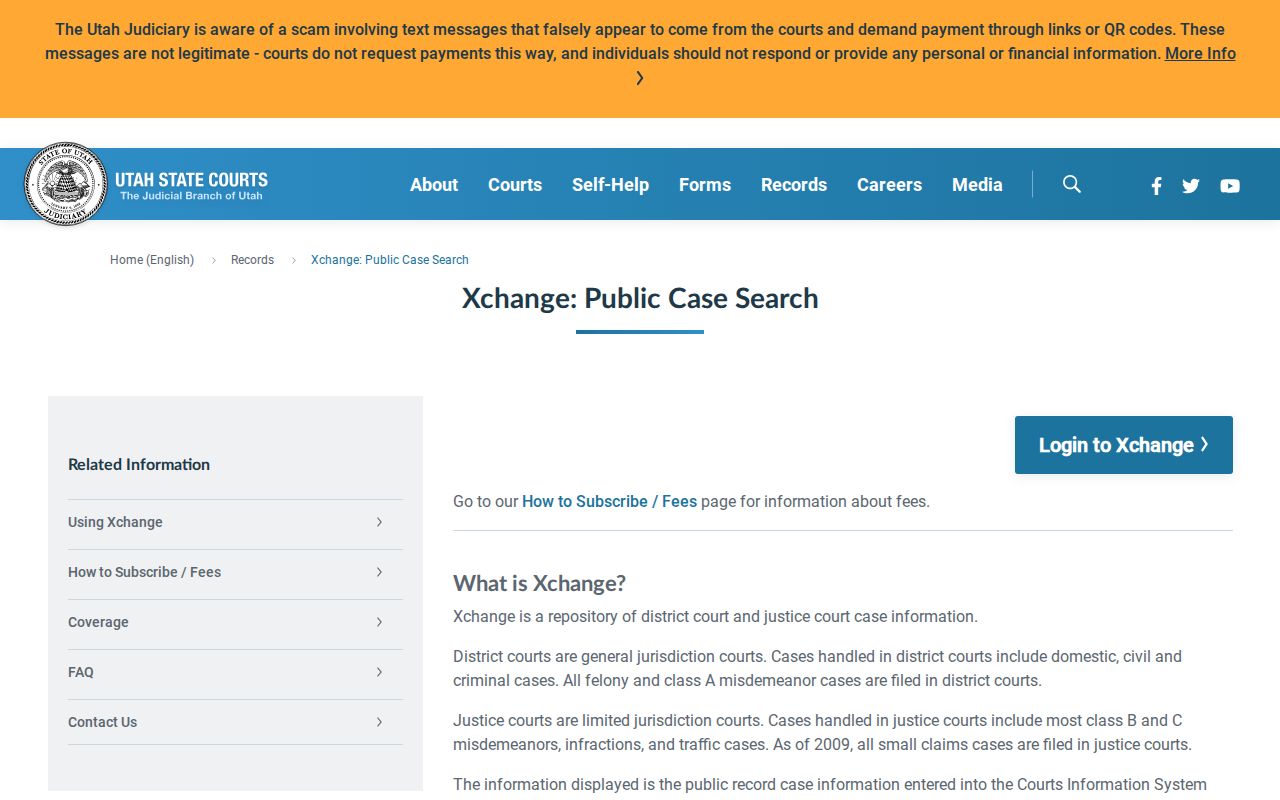
Older or restricted case material may require the court’s records-request process or the State Archives indexes.
For every case lead, preserve the jurisdiction, case number, case type, filing date, party role, and access status. Those details make a later identity check safer than relying on a similar name.
Vital Records Have Separate Gates
Birth, death, marriage, and divorce records are held through different routes. Utah Archives guidance describes birth records as private for 100 years and death records as public after 50 years. Current copies may require qualifying relationship, tangible interest, identification, and a fee under Utah Code §26B-8-125.
Davis County Health lists marriage and divorce certificate service for 1978–2010, limited marriage access for 2011 and later, and a $25 per-record charge with proof of relationship. Older material may belong with the County Clerk, district court, or State Archives. An index is not a certified copy.
Use GRAMA When the Index Stops
Utah’s Government Records Access and Management Act, or GRAMA, is the request path for a public record not exposed online. Name the custodian, record type, date range, address or parcel, and preferred format. Questions alone are not requests. State guidance gives a normal response target of 10 business days and five business days for an eligible expedited request.
Layton City’s form lists $0.25 per page, $2 per certification, the first 15 minutes of research free, then $30 per hour. County requests go through the Clerk and are routed to Health, courts, the Recorder, or another custodian. Ask for an estimate and preserve the response category.
Use the Davis County public-records route to identify the correct custodian.
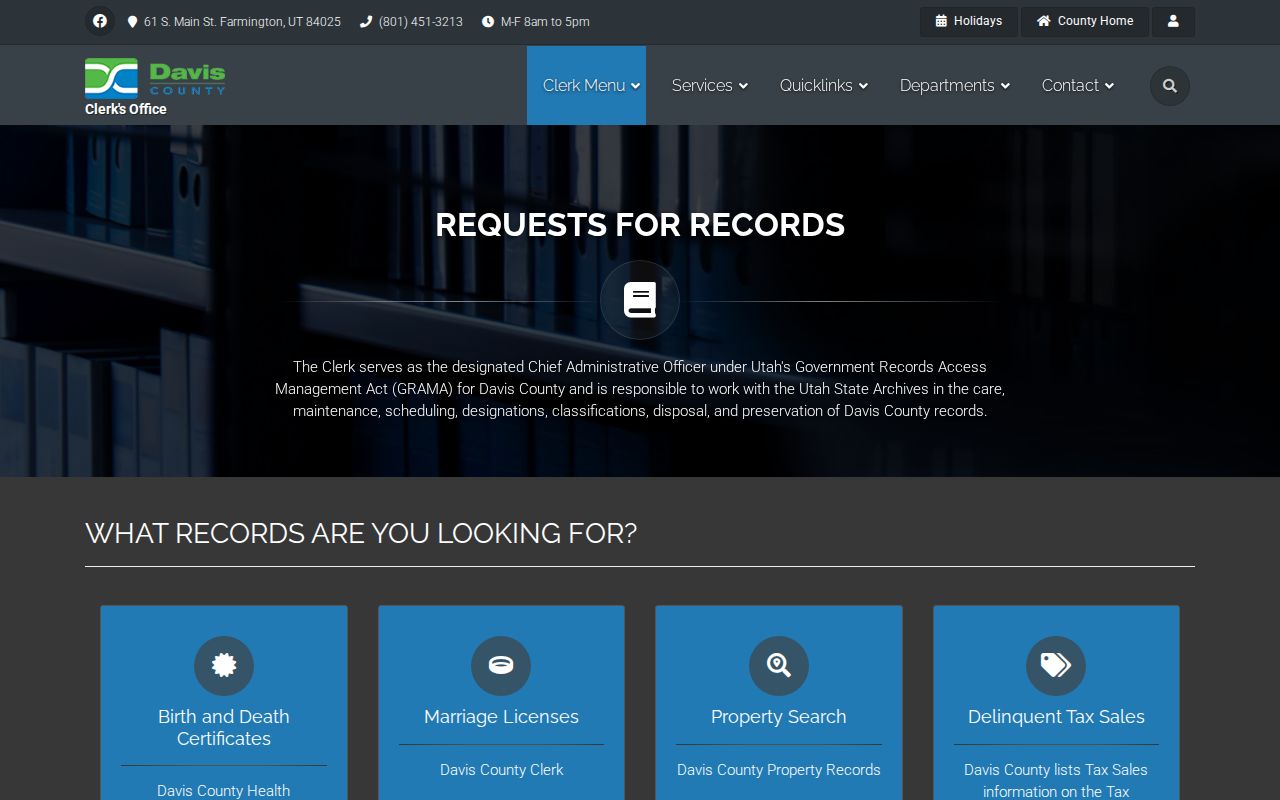
A routing record makes a later request easier to reproduce when an online search ends without a result.
Some Layton Records Are Hidden by Design
Utah at-risk voter designations can limit disclosure for people facing violence, law-enforcement officers, public figures defined by law, armed-forces members, and people with protective orders. Safe at Home offers a substitute address and mail forwarding for qualifying safety situations, normally for four years. Neither program erases every other historical record.
Lawful personal use. Public records support genealogy, civic research, reconnection, and property history. Never use a Layton record to stalk, harass, intimidate, or harm a person.
Key Terms for Resident Records
Clear terms prevent a record from saying more than it does. A parcel, a voter entry, and a directory line each answer a different question.
- Parcel
- A mapped piece of land identified by a serial number.
- Situs address
- The physical address tied to the parcel, not necessarily the mailing address.
- Index
- A pointer to a record, which may not include its image or certified copy.
- Roll
- A list kept for a defined public purpose, such as assessment or registration.
- Criss-cross directory
- A historical address- or street-arranged directory.
Official Sources Versus Compiled Reports
Official sources identify a keeper, access date, record type, and limit. Commercial people-finder reports may combine purchased and public data, merge same-name records, and charge for access or correction. Treat them as unverified leads. A current custodian record remains the better source for a conclusion.
| Question | Best official route | Control |
|---|---|---|
| Parcel connection | Assessor and Recorder | Match parcel and legal description |
| Registration | Utah Voter Search | Use all required fields |
| Case history | Xchange or court request | Check court, number, date, and role |
Historical Layton Directory Leads
The University of Utah Marriott Digital Library describes city directories as listings of residents, streets, businesses, organizations, and institutions. Inspected items include a 1890 Salt Lake City volume and R.L. Polk suburban examples from 1959, 1975, and 1977–78, but a confirmed digitized annual Layton run was not located. A local entry can still provide a dated name, role, organization, and address.
Layton Branch and the Heritage Museum are practical local stops. The branch is at 155 North Wasatch Drive, and the museum is at 403 North Wasatch Drive. Museum CatalogAccess and oral histories add Verdeland Park, O-Court, H-Court, and other neighborhood vocabulary. The Layton city directories page keeps the historical shelf and reading method together.
For an absent modern result, check Utah State Archives, the Davis County Records Catalog, FamilySearch’s Davis County 1869–1953 catalog, and newspapers. Label the outcome as no current public result, not indexed, restricted, or not located in the official sources inspected.
Older Layton work benefits from a source ladder. Start with the exact place wording in the directory or newspaper, then compare the closest census year, a deed or plat, and an obituary or vital index when the dates fit. The Library of Congress newspaper titles, the Davis County Clipper, the Heritage Museum, and the University of Utah collection each preserve a different kind of clue. A citation should say whether the item was digitized, browsed on microfilm, found in an index, or requested from a custodian.
The same discipline applies to a business or organization clue. Utah Commerce can connect a principal or registered agent to an entity filing, and the HOA registry can identify an association legal name. Neither turns an organization address into a list of Layton households.
When the question is about a living relative, use the least invasive source that can answer it. Verify your own voter record through the official form, use a known parcel for property history, and use the Library or Archives for family research. Preserve the source date and avoid collecting details that do not serve the question.
For repeat research, keep a simple source note: the URL, query wording, access date, record identifier, and the relationship represented. That practice makes a Layton residents directory result easier to check months later when a portal, fee, or privacy rule has changed.